Fall, what a wonderful time of the year!..
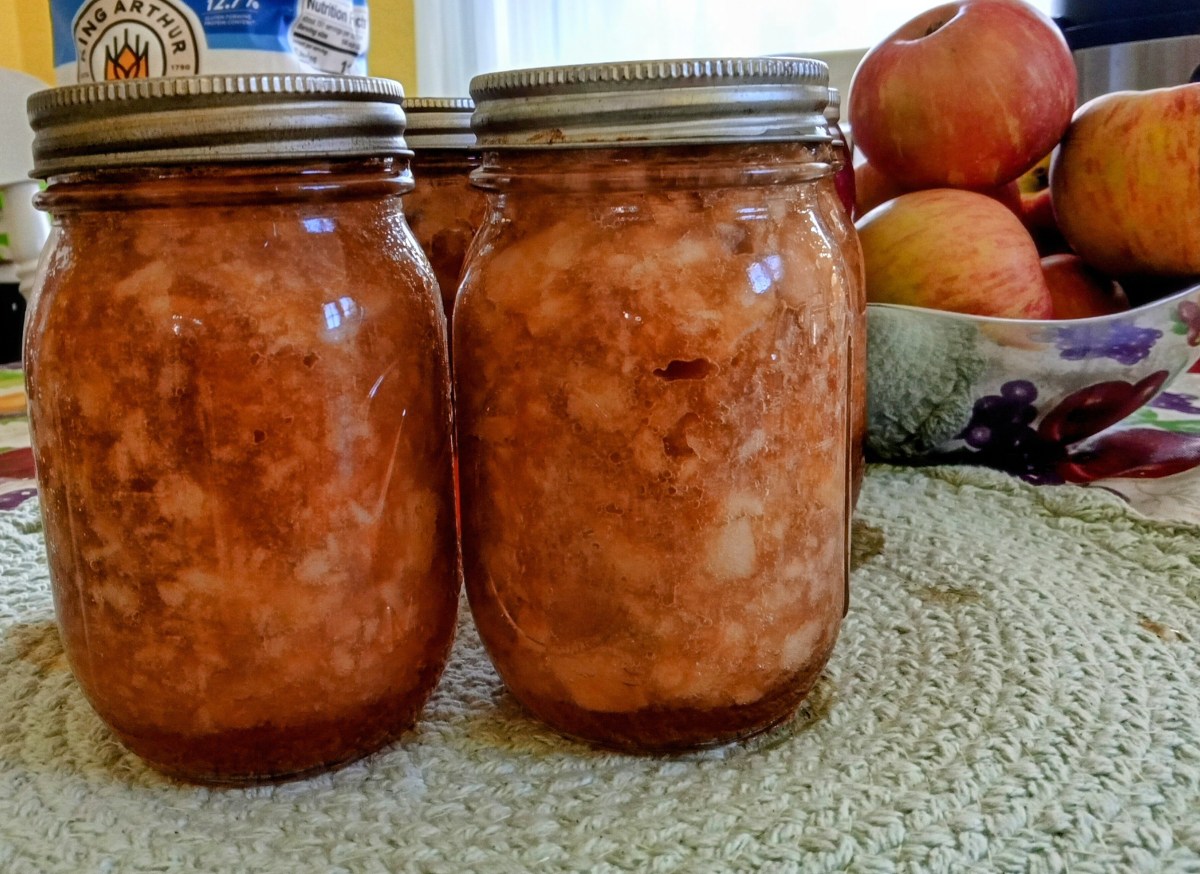
We traveled to a remote Fruit Stand earlier this week where we purchased a half-bushel of Cortland apples, my favorite for baking, dehydrated and applesauce.
Yesterday evening I pared all but enough for fritters and a pie, then I roughly chopped the apples into large pieces, put them into a slow cooker with about a cup of apple cider (liquid to keep the apples from sticking to the pot). I set the temperature on low while I was peeling the apples, adding each to the pot until I had the amount I needed.
Next, I lowered the temperature to WARM, put the lid on and went to bed.
This morning the applesauce was perfect! I cooked down very slowly and there were some chunks which was just the way I like it.
I added nothing except the small amount of organic cider. The applesauce were naturally perfectly sweet.
Next pour the applesauce into hot pint jars, wipe the rims and add the lids. Process 20 minutes, pints/quarts, in a boiling water bath.
The tiny garden has been productive and has given us a pathway for planning next year’s garden. Unlike at our Virginia farm our new homestead has plenty of pollinators for our garden, and surprisingly the deer stayed away all summer.
Two of the garden towers planted with yellow wax beans has produced all we need plus a supply of seeds for next year.
We planted six pasta tomato plants in grow bags and they produced enough fruit to share with the neighbors, enjoy some with our meals, and still pressure can 12 pints for pasta sauce.
We harvested sweet potatoes, butternut squash, yellow summer squash and zucchini, five nice heads of cabbage, red, yellow and orange peppers, peas, strawberries, blackberries and assorted herbs.
We have a very small yard. We have a good sized deck where we placed 7 garden towers, 9 or 10 grow bags, and a few five-gallon buckets. Down in the back yard, an area of only approximately 12 x 20 sf, I set three 13 gallon growbags for 9 sweet potato plants and three 5-gallon buckets for three butternut squash vines.
We will spend a portion of the winter months planning and designing the new springtime garden.
 Our Simple Homestead